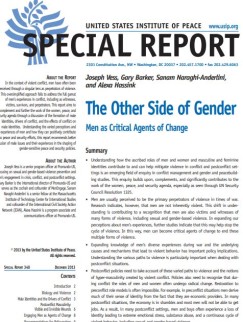
This report from the US Institute of Peace delves into the evolving field of understanding how the assigned roles of men and women, alongside masculine and feminine identities, contribute to and can potentially mitigate violence in conflict and post-conflict settings. It aligns with the broader agenda of women, peace, and security, particularly UN Security Council Resolution 1325, by recognizing men's multifaceted experiences during times of conflict. While men are commonly viewed as primary perpetrators of violence, research reveals their nuanced roles as victims, witnesses, and even agents of change in halting the cycle of violence. The paper emphasizes the need for policy responses that acknowledge the diverse paths to violence and the impact of hyper-masculinity perpetuated by conflict. It underscores the challenges faced by men in post-conflict settings, including loss of identity and emotional stress, which can fuel continued violent behavior. Promising interventions focusing on psychosocial support and fostering healthier, nonviolent behaviors among men offer valuable insights into engaging them in sustainable peace efforts. However, the report highlights the necessity for further research to understand men's experiences in conflict and their specific needs and realities. It calls for policy advancements that recognize both the vulnerabilities of women and girls and the importance of addressing men's psychosocial needs to prevent gender inequalities and sexual and gender-based violence in post-conflict societies.
2013